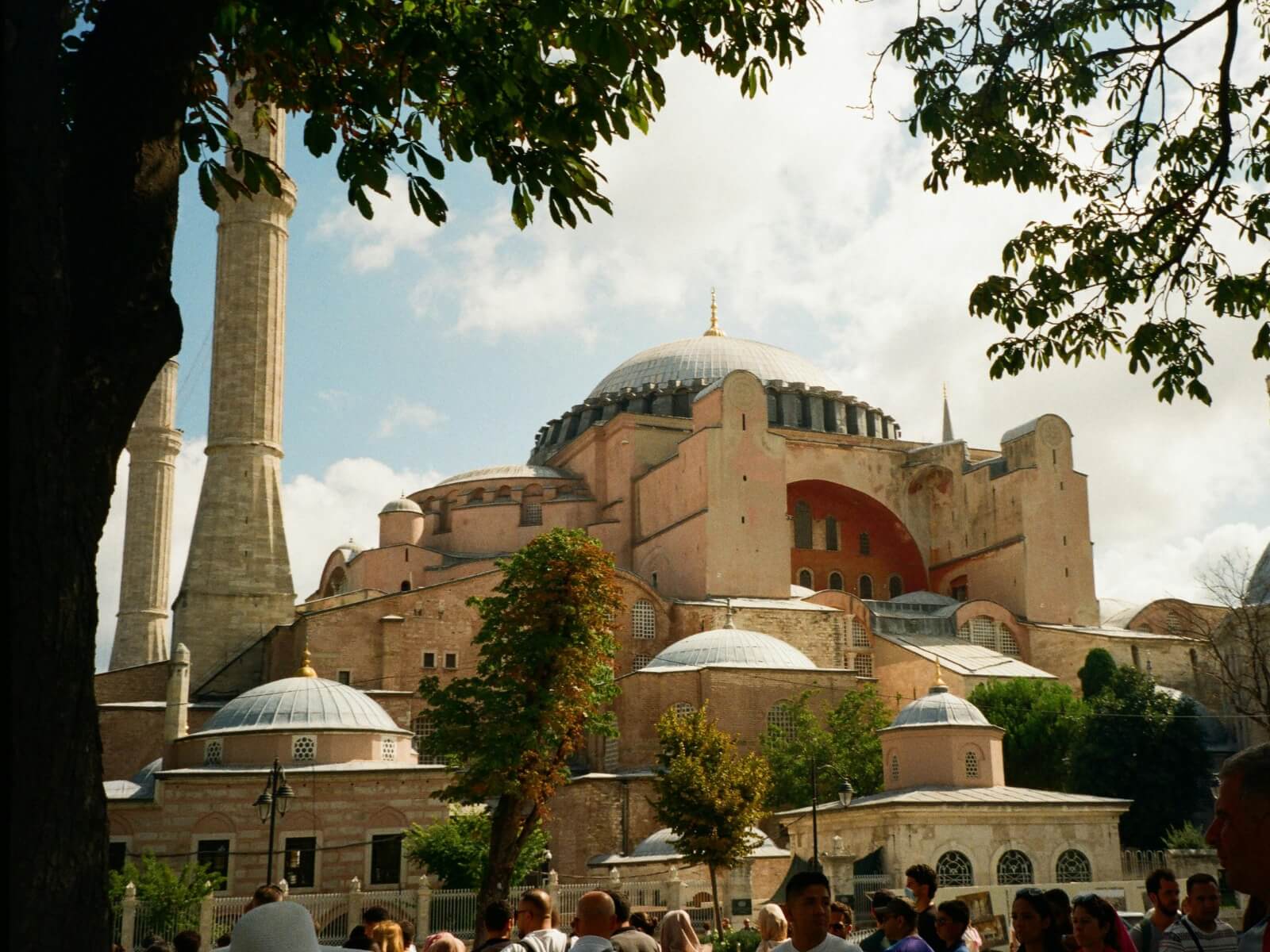
Hagia Sophia in Istanbul represents one of the strongest connections between Istanbul’s Byzantine and Ottoman past. Originally constructed in the 6th century during the Byzantine Empire, the building later became one of the Ottoman Empire’s most important mosques following the conquest of Constantinople in 1453. Today, traces of both civilizations remain visible throughout the structure, from Byzantine mosaics and marble interiors to Ottoman calligraphy and Islamic architectural additions.
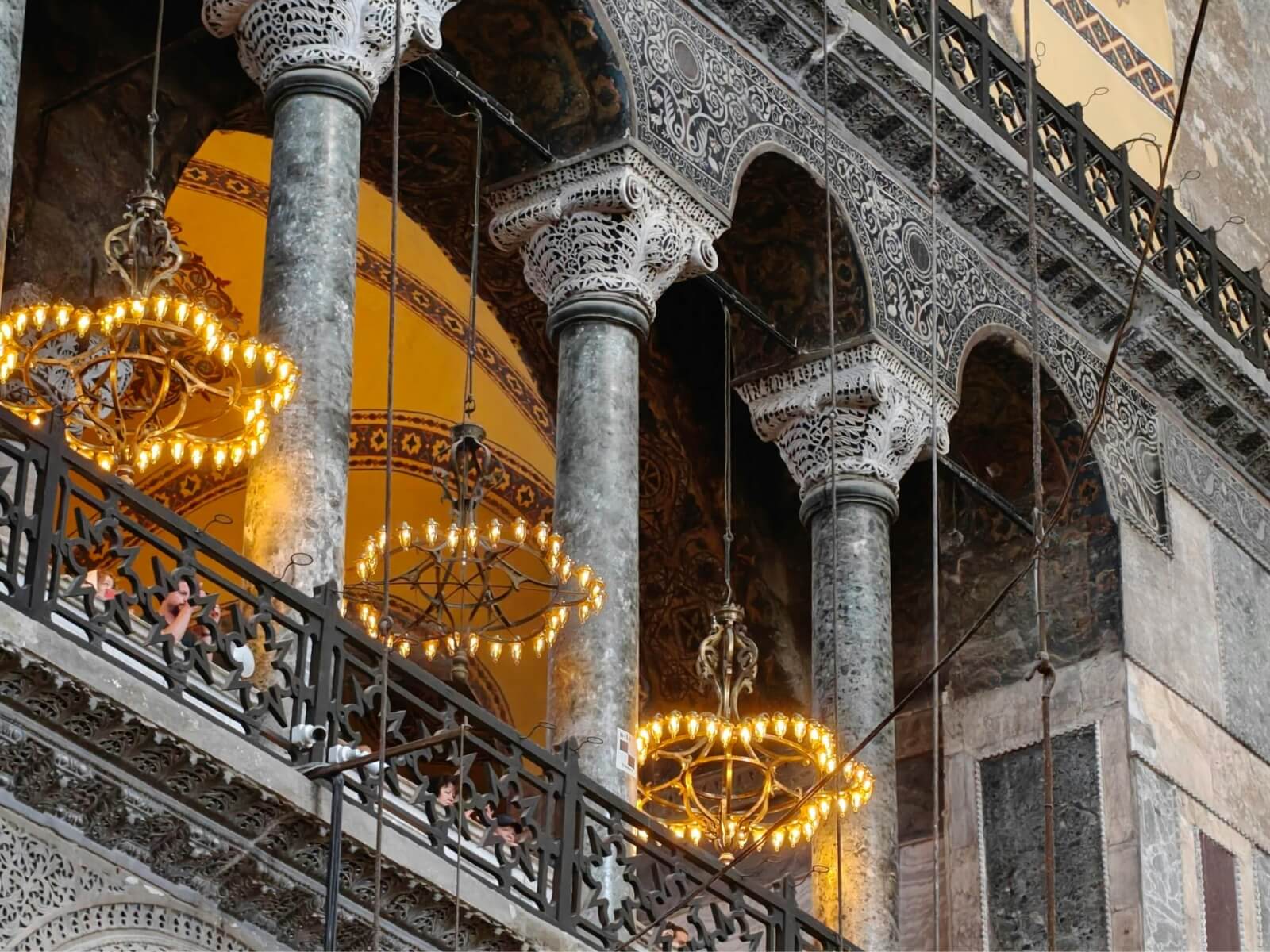
Inside, the scale of the building creates a unique atmosphere shaped by light, height, and historical detail. Large chandeliers, towering columns, domes, and centuries-old surfaces contribute to the sense of monumentality that defines the experience of visiting Hagia Sophia. Throughout the day, visitors, worshippers, and tourists move through the space simultaneously, reflecting the building’s continuing role within everyday life in Istanbul.
Located in Sultanahmet within Fatih, Hagia Sophia in Istanbul stands among some of Istanbul’s most important historical landmarks, including the Blue Mosque, Basilica Cistern, and Topkapı Palace. The surrounding area is shaped by public squares, historic streets, tram lines, and constant pedestrian movement throughout the day, making it one of the city’s busiest cultural and tourism centers.
Early mornings and evenings often offer a calmer atmosphere around Hagia Sophia, while daytime hours bring larger crowds, especially during peak travel seasons. The combination of monumental architecture, surrounding historical sites, and the daily rhythm of Sultanahmet creates an experience that feels deeply connected to Istanbul’s identity as a city shaped by multiple empires and cultures.