
Interview by: Ova from Istanbul Muse
Hakan: “Today was a bit unusual because I had to work a lot. It was outside of my normal routine. Usually, sports are part of it too. I like working out around midday, in the park, by the water, down at Moda Sahil. After that, I usually work for a few hours and then go out to eat with friends.”
Hakan tells me that he usually wakes up around ten or eleven in the morning and doesn’t go to bed until one or two at night. When I ask whether he’s secretly partying all the time, he describes himself like this:
Hakan: “I’m actually a very boring interview guest because I often work at night.”
Every now and then he’ll hang out with the guys from his shared apartment, but even at night he’s usually working. Personally, I don’t find him boring at all. After all, later in the interview we somehow end up talking about Pablo Escobar, leather, and latex.
At this point it also becomes clear that Hakan doesn’t actually live in Istanbul permanently. He usually comes for two or three months at a time before moving on again.
Germany, Istanbul, Bali — and then the cycle starts over.
Naturally, I’m curious about Istanbul’s competition.
Ova: “So what are the other places? What’s Istanbul’s biggest competitor?”
Hakan: “Bali.”
Okay. That was quick.
Ova: “And where’s home?”
Hakan: “Germany. I was born and raised there.”
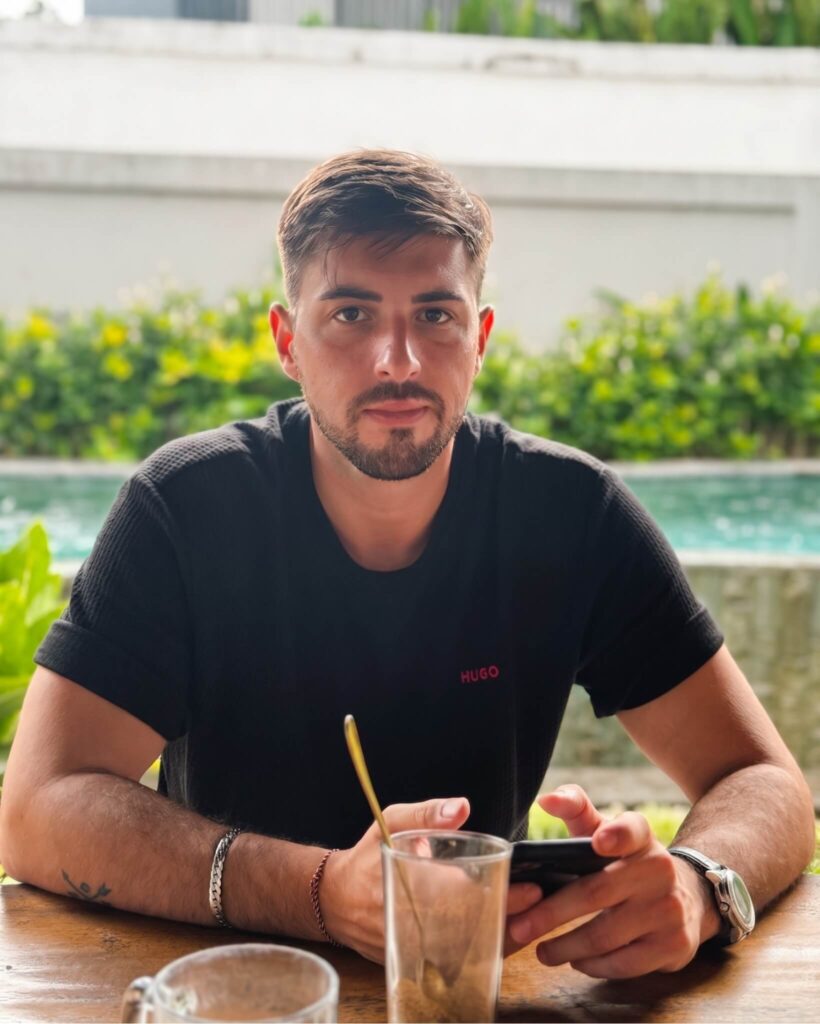
Germany has simply become a little too cold for him these days. That’s one of the reasons he keeps returning to places like Istanbul and Bali.
At this point, I should probably mention that neither of us currently looks particularly cold.
I’m wearing a skirt. Hakan is sitting across from me in shorts.
Unfortunately, the weather has decided not to cooperate.
Ova: “I should mention that we’re sitting in a restaurant in Moda right now, enjoying a glass of white wine. They brought us some tapas with the wine, which was very nice. I’m wearing a skirt, my interview guest is wearing shorts, and honestly, it’s a little cold, Hakan.”
Hakan: “Yeah, it actually is a bit cold today. Yesterday it was almost thirty degrees, so the shorts made more sense. But even when it’s a little chilly, it’s still nice being outside in lighter clothes.”
Ova: “So the weather is definitely an advantage compared to home?”
Hakan: “Absolutely.”
Ova: “Okay, since we’re already talking about shorts and clothes: does your style actually change in Istanbul?
Or is it simply the fact that you can wear shorts here? Have you developed some kind of secret Istanbul fashion personality? Like: this is how I dress in Germany, and this is how I dress in Istanbul?”
Hakan: “I think, subconsciously, something like that has probably happened because you’re much more anonymous here.”
And there it was.
The sentence that would stay in my head for the rest of the evening.
More anonymous.
Ova: “Hmm. So… leather and latex too?”
I start laughing. Honestly, it was only meant as a joke. But then:
Hakan: “Yeah, every now and then.”
Okay. Now I’m laughing even harder.
For a brief moment, I think we may have accidentally started a very different interview.
Hakan laughs and suggests that maybe we should leave that topic alone. But I wouldn’t be much of a reporter if I didn’t at least try.
Ova: “Well, now the readers are going to wonder:
Aha. I didn’t know this side of Hakan existed.”
Hakan: “Maybe we’ll get into that in another episode.”
Unfortunately, I wasn’t quite ready to let the topic go.
I decide to let the wine do a little more work and try again later.
Ova: “So being anonymous makes people a little braver?”
Hakan laughs.
Hakan: “Yeah, I think so. Independent of clothing, I recently grew a moustache. That’s something I probably never would have done in Germany.”
When I ask where the moustache came from, he explains:
Hakan: “I think it’s a mix of Turkish culture and Colombian—or more generally Latin American—culture. The idea actually came after we watched the Netflix series about Pablo Escobar.”
There it is. The answer absolutely nobody expected.
Hakan: “People here are often very individual. They have their own style. And that encourages you too.”
For a while, we stay with that thought. Maybe because so many people come to Istanbul looking for something new. Or maybe because in a city of more than fifteen million people, you suddenly get the feeling that nobody really cares who you were yesterday.
Ova: “Since we’re already talking about being people here: does your social circle grow faster here? What’s it actually like being in Istanbul when you weren’t born and raised here? Do you have many friends? And if you do, are they mostly Istanbul locals or people who are only here temporarily, like you?”
Hakan: “I don’t think there’s a simple answer to that. You meet people very quickly here. But those connections don’t often turn into long-term friendships. They’re usually more temporary. Because people here are so different, it can sometimes be difficult to find people who are really on the same wavelength. Compared to Bali, for example, there are more defined communities there. Digital nomads, surfers, fitness communities. People find their place more quickly, and those friendships often become more long-term.”
Ova: “What do you think about the people who live here? The people who were born and raised in Istanbul? How do you see them?”
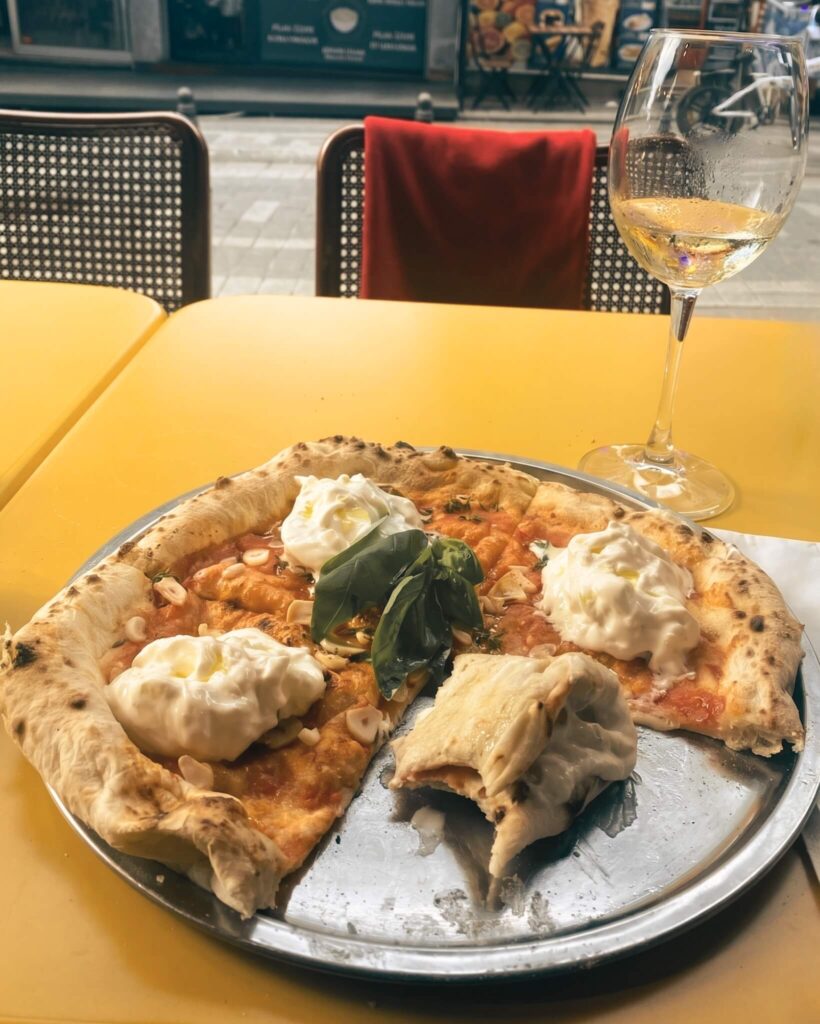
Hakan calmly cuts into his pizza.
For a moment, he ignores my question entirely. To be fair, the pizza looks fantastic.
Hakan laughs.
Hakan: “It’s hard to say. Everyone is different. But I get the feeling that a lot of people are simply trying to make the best of things. And not let everyday problems get to them too much.”
At this point, we decide our pizza has suffered enough.
And we take a short break.
After a short pizza break, we’re back.
The pizza has gotten smaller, and so has the wine level on the table. I’ve already managed to force at least one glass of wine on Hakan, so naturally I’m curious whether he’ll loosen up enough to finally explain the leather-and-latex situation.
Hakan: “I think I’ll need a few more glasses for that.”
We both laugh. Secretly, I’m already looking around for the waiter.
Ova: “We’ve talked about the people in Istanbul. Maybe we should talk about the animals now. They’re pretty much everywhere too.”
Hakan: “Yeah, they are. I actually have a lot to say about that. And a lot of personal experience. The street animals are everywhere. They’re all very cute. Very friendly towards people. The thing is, there are so many of them. And I think there’s also a lot of animal suffering that the average tourist never sees. If you live here longer, though, you definitely notice it. Here and there. I’ve had a lot of personal experience with that too.”
At this point, I’m curious.
Hakan: “It actually led to a failed relationship.”
Wait. A relationship? Because of street animals? Naturally, I need more information.
Ova: “A relationship of yours ended because of street animals?”
Hakan: “Yeah.”
Ova: “Okay, we’re definitely going to need more details.”
Hakan laughs. Then he tells the story.
Hakan: “I had a somewhat crazy girlfriend. She came here from Germany with me and couldn’t just sit back and watch the animal suffering. She wanted to help every single animal. At some point, we ended up with more than thirty cats in the rooms and the garden of our apartment. That was obviously emotionally exhausting for everyone involved. And eventually, the relationship didn’t survive it.”
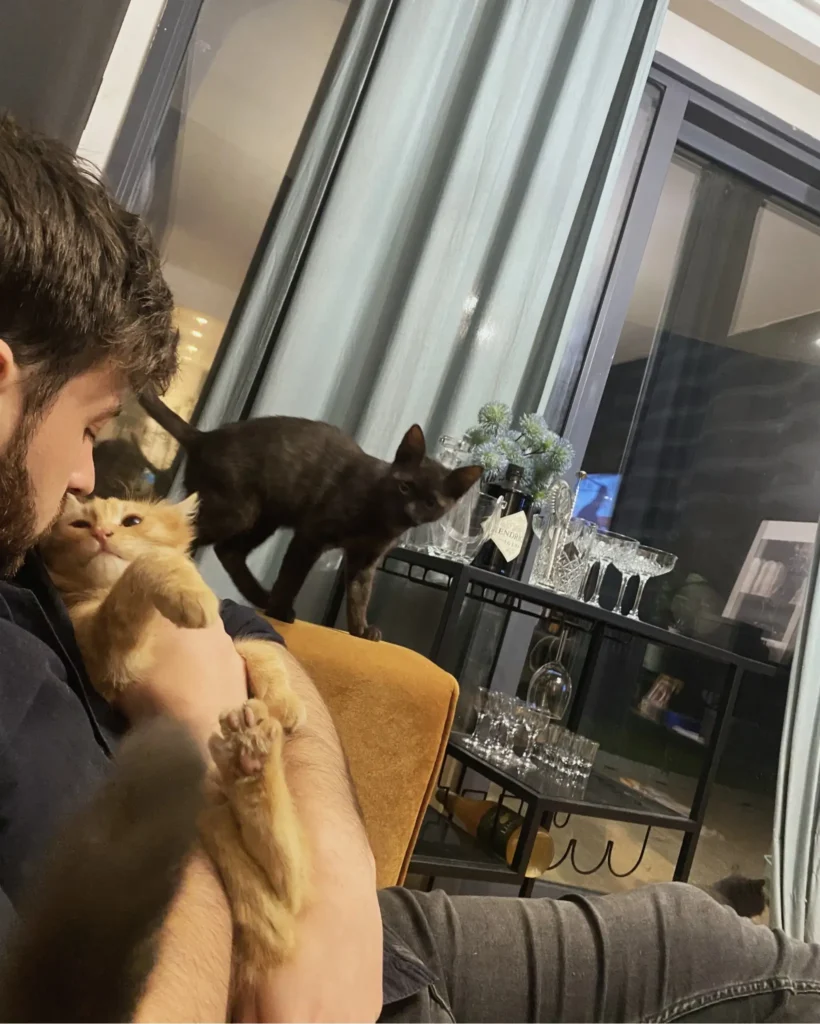
Thirty cats.
Thirty.
To this day, I’m not sure whether I’m more impressed by the number itself or by the fact that two people genuinely tried to live with thirty cats.
Ova: “So her mistake was that she loved animals too much. So basically, you’re the villain in this story?”
Hakan: “Exactly. That’s another way to put it.”
We both laugh.
Whether that’s the whole story remains open to interpretation.
Ova: “Apart from the street animals, what’s the first image that comes to mind when you think of Istanbul?”
Hakan thinks for a moment.
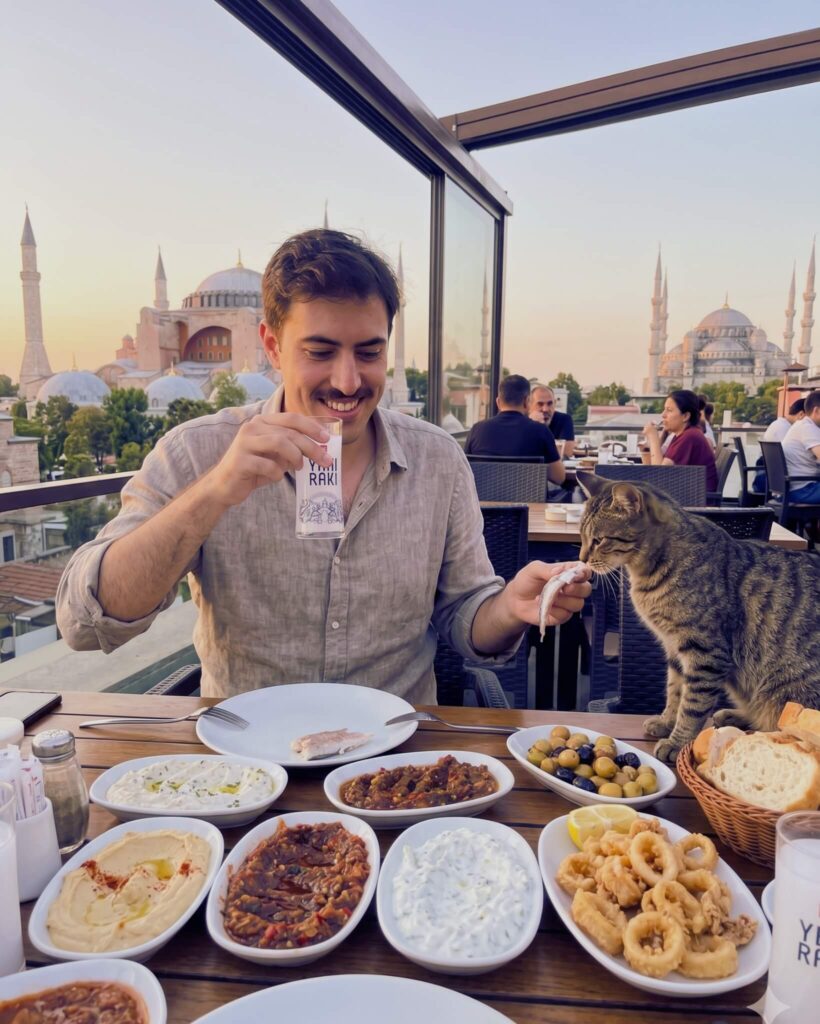
Hakan: “I think cats are still part of that image. It’s a moment in a restaurant or a meyhane. The table is covered with mezes and glasses of rakı, and you’re feeding a cat some white cheese.”
I have to interrupt immediately.
Ova: “Cats shouldn’t be eating cheese.”
Hakan: “Okay. Then fish. Hamsi.”
Ova: “Exactly. If we’re building an imaginary Istanbul scene, let’s at least make it animal-friendly.”
I laugh, but cats are actually lactose intolerant. A surprising number of people don’t know that.
Hakan quickly updates his mental image.
Hakan: “Fine. We’re feeding the cat hamsi.”
Ova: “Without the bones.”
Hakan: “We’ll remove those first.”
Ova: “Perfect.”
I have to admit, I like this image. Rakı. Mezes. A cat.
And apparently perfectly prepared hamsi.
Ova: “If Istanbul were a colour?”
Hakan: “Blue.”
Ova: “Please don’t be that creative.”
We laugh.
Hakan: “I don’t know. Blue is just the first thing that comes to mind.”
Ova: “Because of the Bosphorus?”
Hakan: “Yeah. Probably.”
The conversation slowly becomes more serious.
Away from cats. Away from moustaches. Towards the things people start thinking about when they’ve spent a long time living in a city.
Ova: “What are the kinds of thoughts or concerns tourists don’t have, but people who spend a lot of time here do?”
Hakan: “Lately? Probably prices. People talk about how expensive everything is becoming. About how it’s getting harder and harder to really enjoy the city. If you’re only here for a week as a tourist, you probably don’t notice it as much. Or maybe you just don’t care. But as a digital nomad, you’re constantly comparing places. If you compare Istanbul to Southeast Asia, where a certain budget can still buy a very comfortable lifestyle, Istanbul is becoming increasingly difficult.”
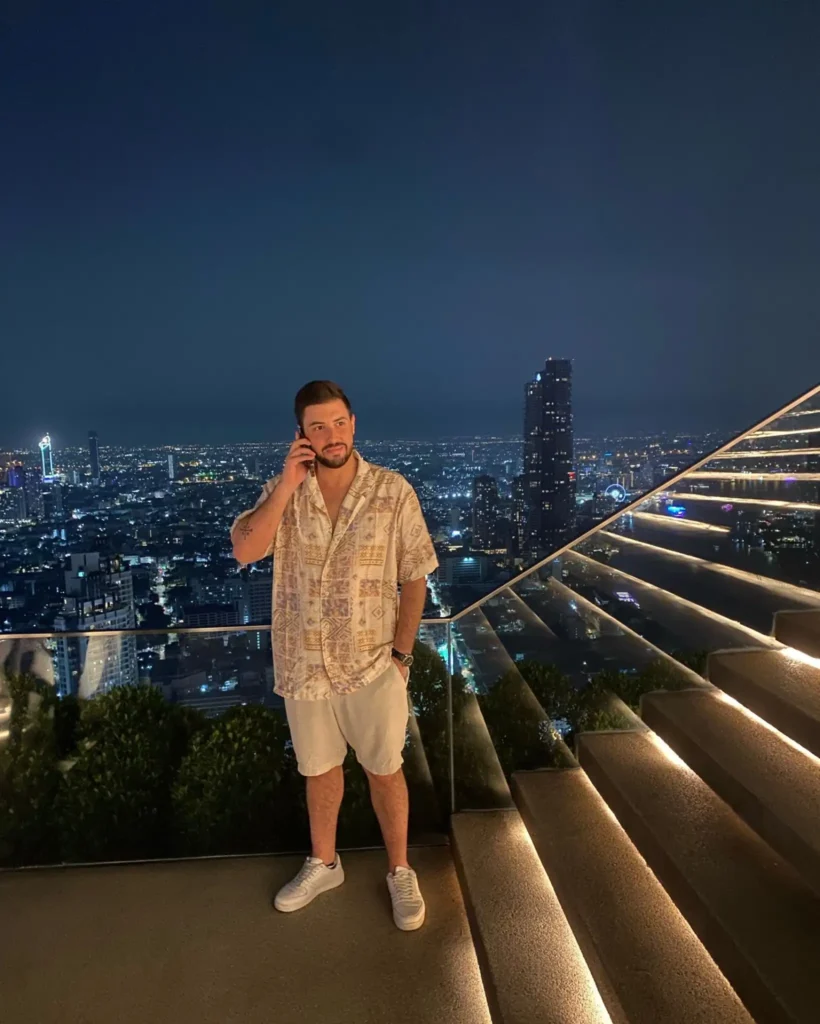
And despite talking about cats, failed relationships, moustaches, and rising prices, I keep coming back to the same question. Why Istanbul? Why does someone keep returning?
Ova: “Is there a moment where you think: This is peak Istanbul? Something that happened here that made you say: Yep. This is Istanbul.”
Hakan: “Lately, I think it would be leaving an event at three in the morning. You see international tourists everywhere, coming back from a club. Then you turn a corner and suddenly find yourself at a local esnaf kokoreç place. You’re sitting there drinking tea and eating kokoreç. That contrast between international life and traditional Turkish kokoreç culture. That’s what feels like Istanbul to me.”
By now, we’re almost at the end. Most of the pizza is gone. The wine too. Which means it’s time for the final question.
Ova: “We’re almost done. You can get back to your pizza in a second. I just have one more question. The final question. If Istanbul were a person—and I’ll give you a moment to think about it—how would you describe them?”
Hakan thinks.
Longer than he has for any other question this evening.
Then he answers.
Hakan: “A narcissistic person. I’m not even sure narcissistic is the right word. But someone with a lot of charm. Someone very attractive. Very magnetic. But also very toxic. Someone who doesn’t really care whether you’re doing well or not. Someone to whom you’re ultimately insignificant.”
Ova: “Wow.”
Hakan: “That’s how I’d describe it.”
Before we finish, I ask Hakan if he’d like to leave our readers with one final thought.
Hakan: “I’d definitely recommend that people don’t only visit the tourist attractions when they come to Istanbul. Go to local neighbourhoods too. Especially Kadıköy, which is my favourite district in the city. For me, it’s a much better place to actually live than many other parts of Istanbul. The atmosphere there reflects everyday Turkish life much more closely.”
Kadıköy.
For some reason, that answer doesn’t surprise me. After all, we’ve been sitting there since the beginning of this interview.
Ova: “Thank you, Hakan.”
Technically, this would have been a very clean ending. Technically.
Ova: “So what are your plans for the rest of the evening after our interview date involving pizza and wine?”
Hakan: “Looks like we’re buying another bottle of wine. And then we’ll see if we end up talking more about leather and latex.”
Whether that conversation actually continued remains between us, a bottle of wine, and Istanbul.
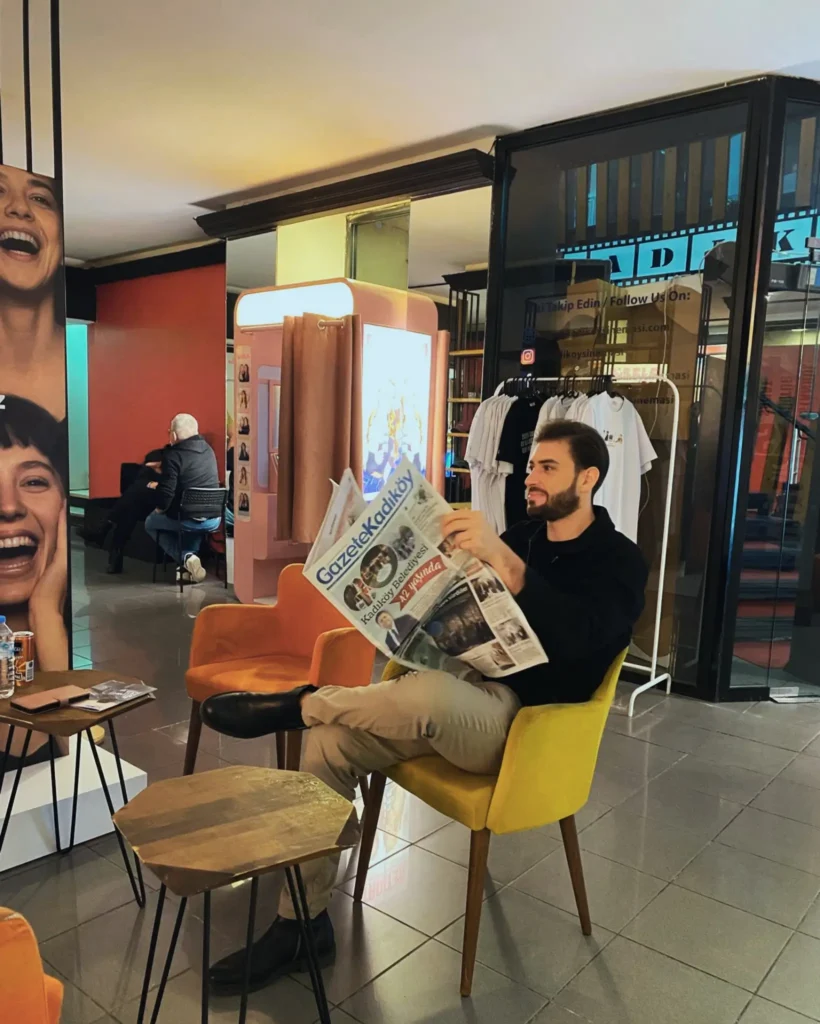
Every person experiences Istanbul differently.
For some, it’s home. For others, it’s a place they return to again and again. Some know the city through childhood memories, others through late-night conversations, daily routines, favorite cafés, or long walks through unfamiliar neighborhoods.
Istanbul Through Their Eyes is a collection of honest conversations with people whose lives have crossed paths with the city.
No scripts. No perfect answers. Just different perspectives on one of the world’s most fascinating places.
Because there isn’t just one Istanbul.
There are millions.