
Iconic | Photogenic | Scenic
30–60 min
Free
Fatih
Culture Lovers | First-Time Visitors | Photographers | Solo Travelers
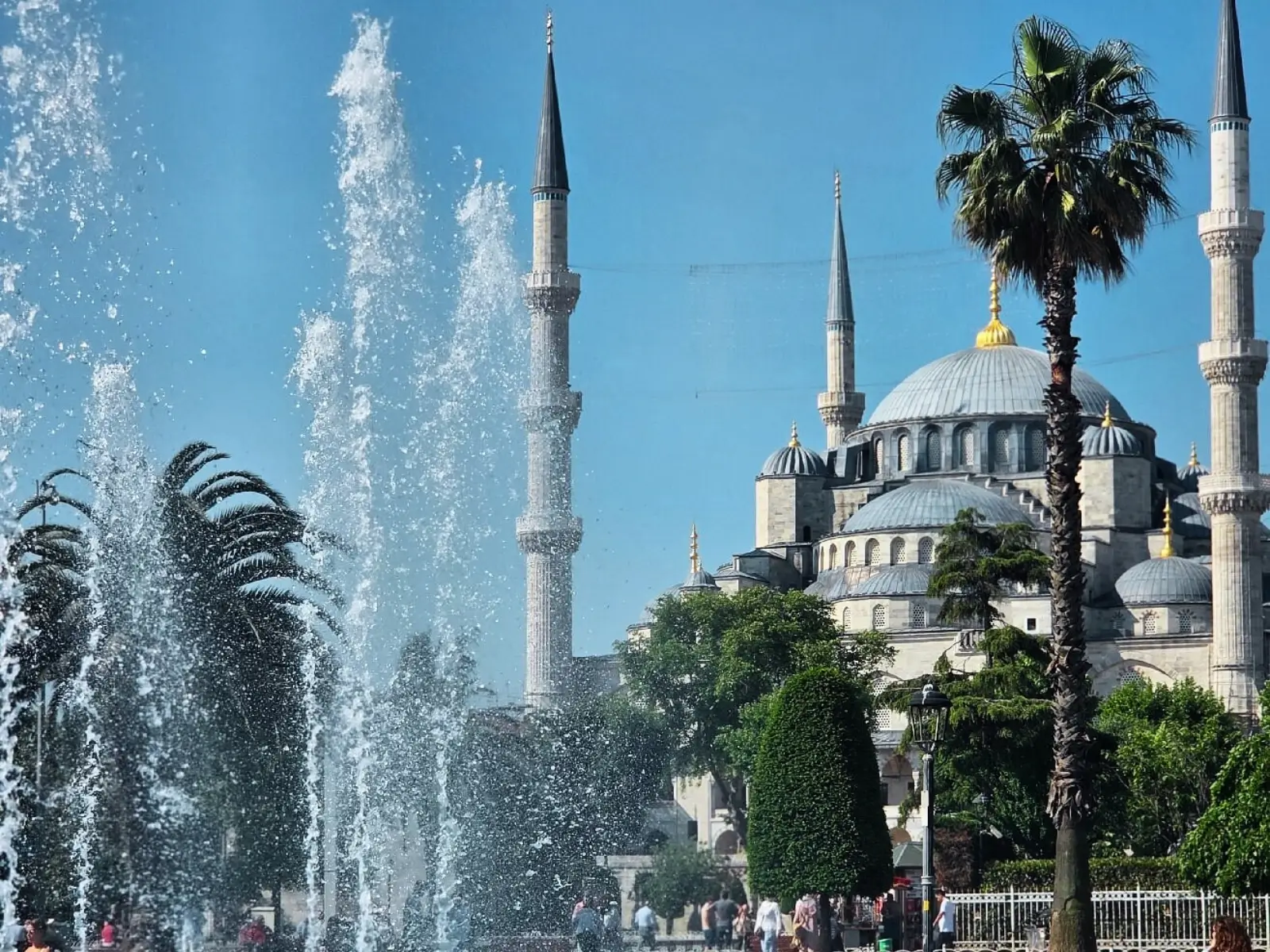
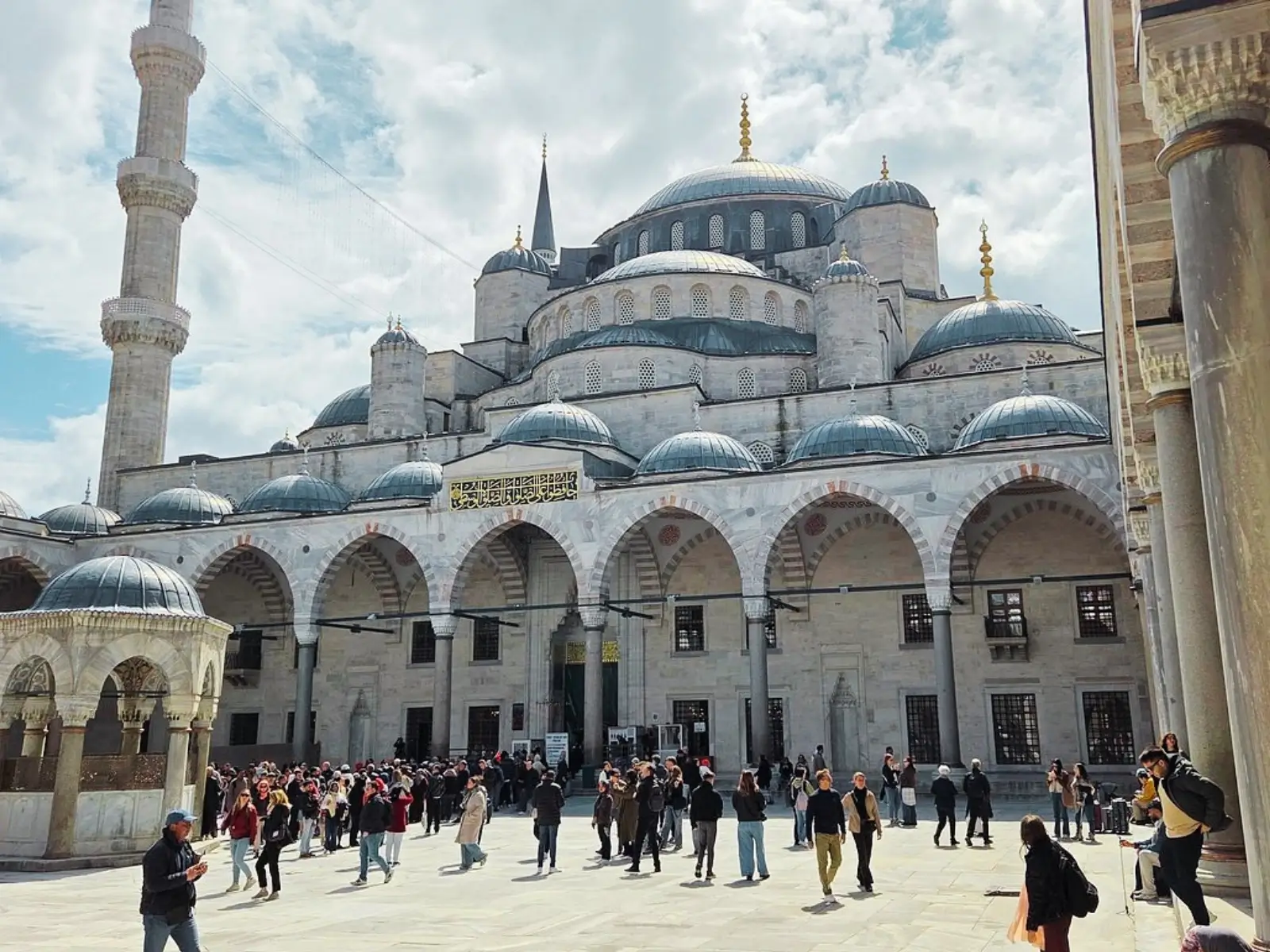
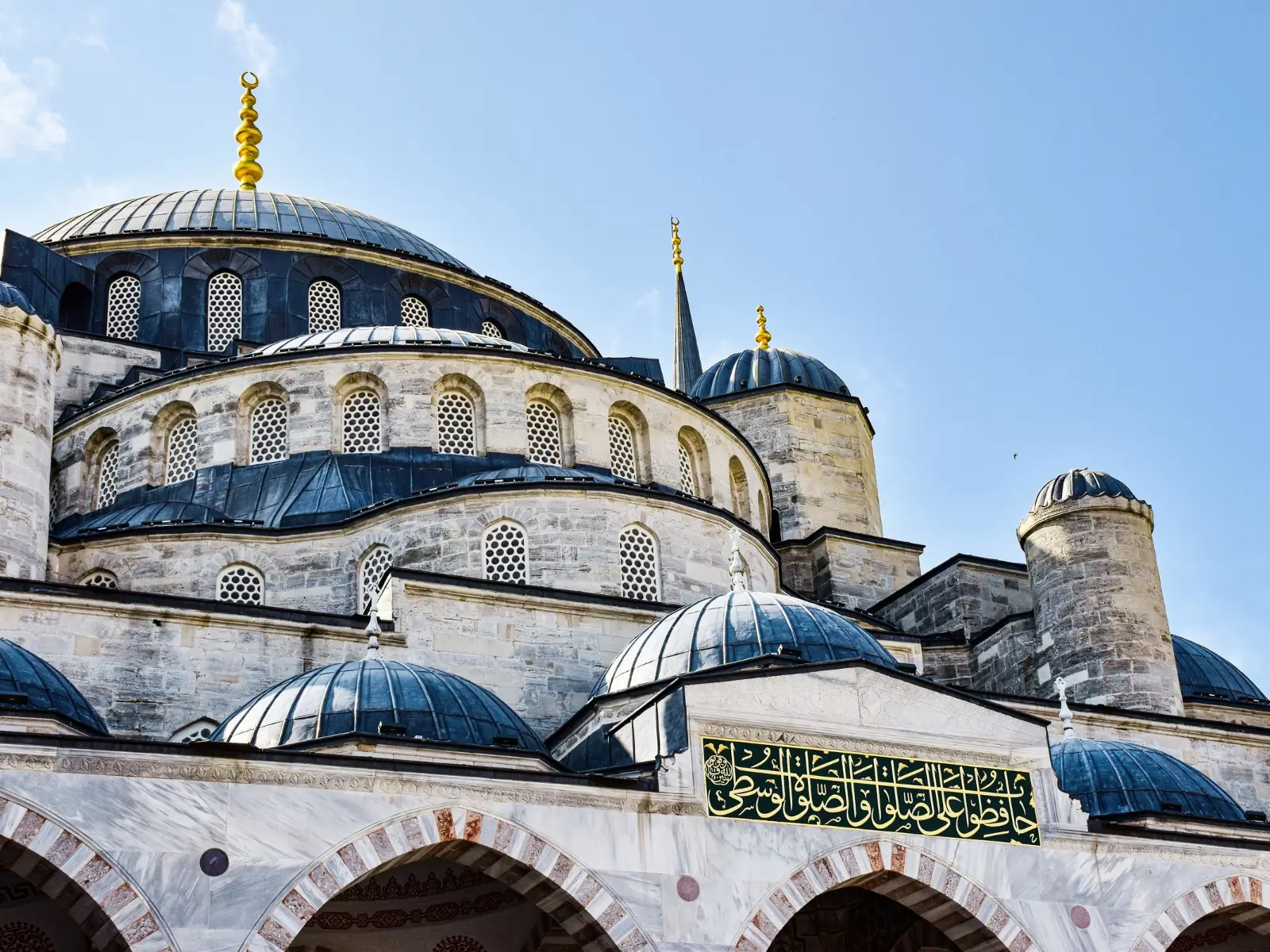
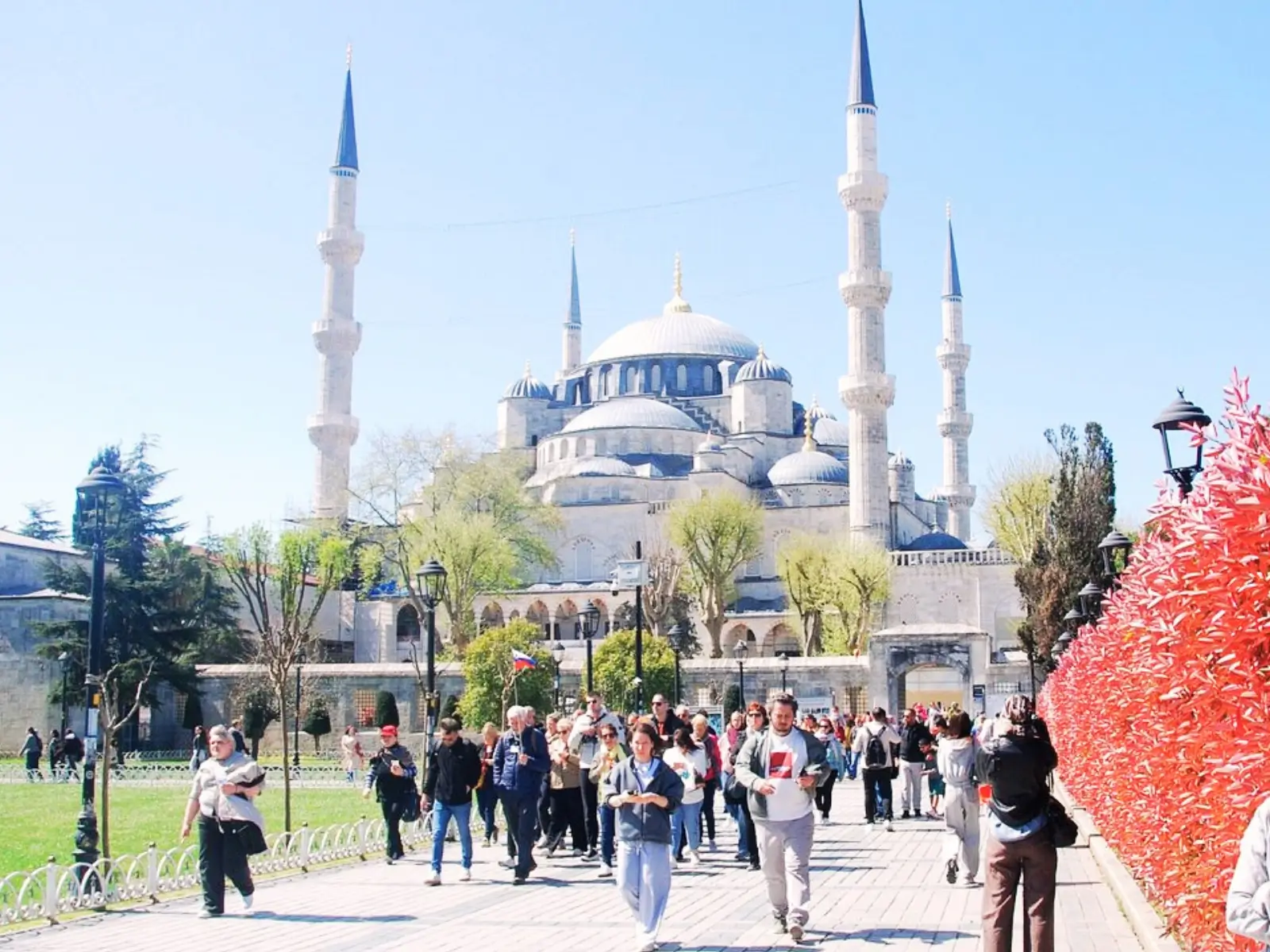
The Blue Mosque immediately dominates its surroundings through scale and symmetry. Cascading domes rise above the historic skyline while six minarets frame the structure against the open sky, creating one of the most recognizable silhouettes in Istanbul.
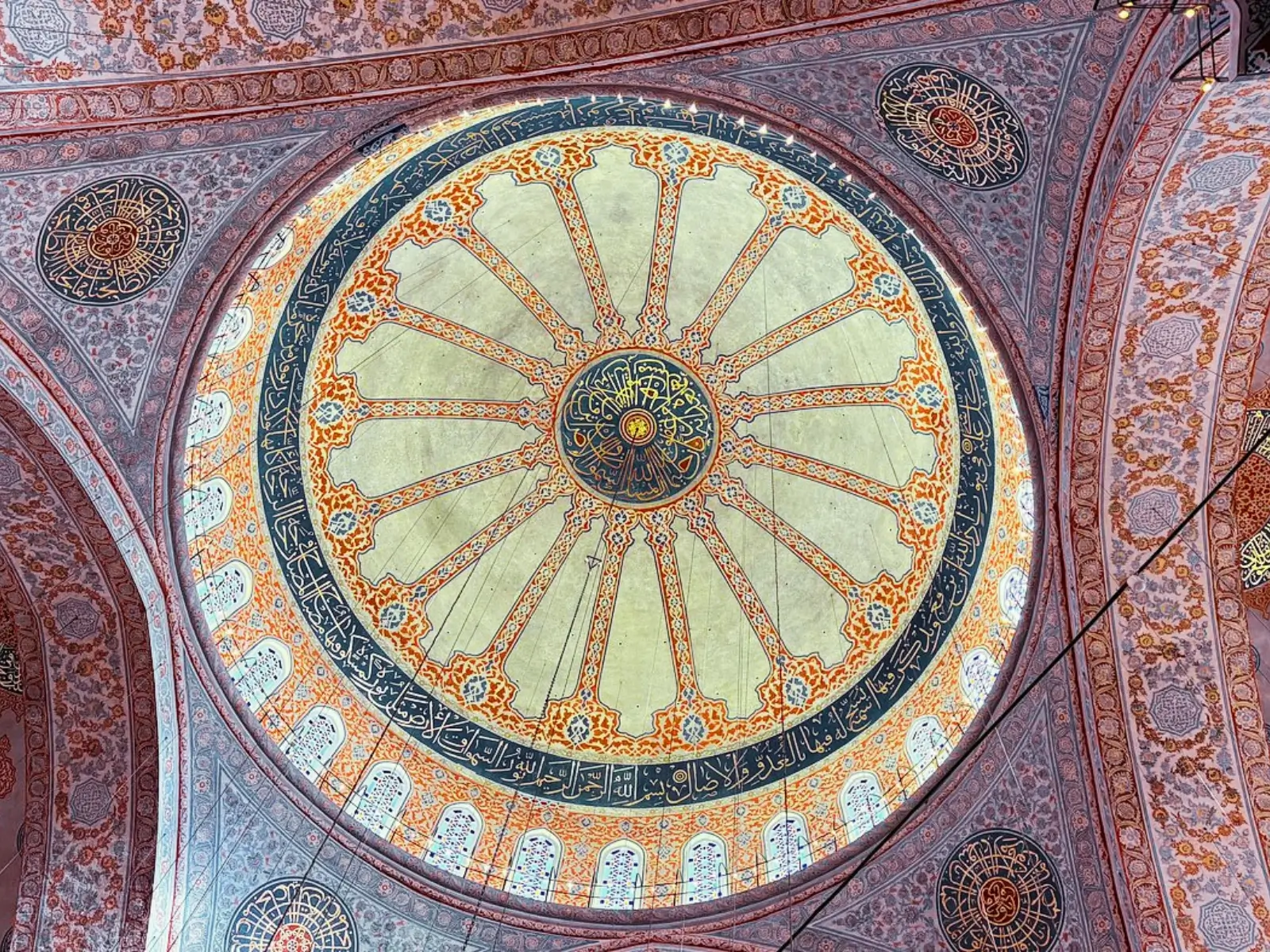
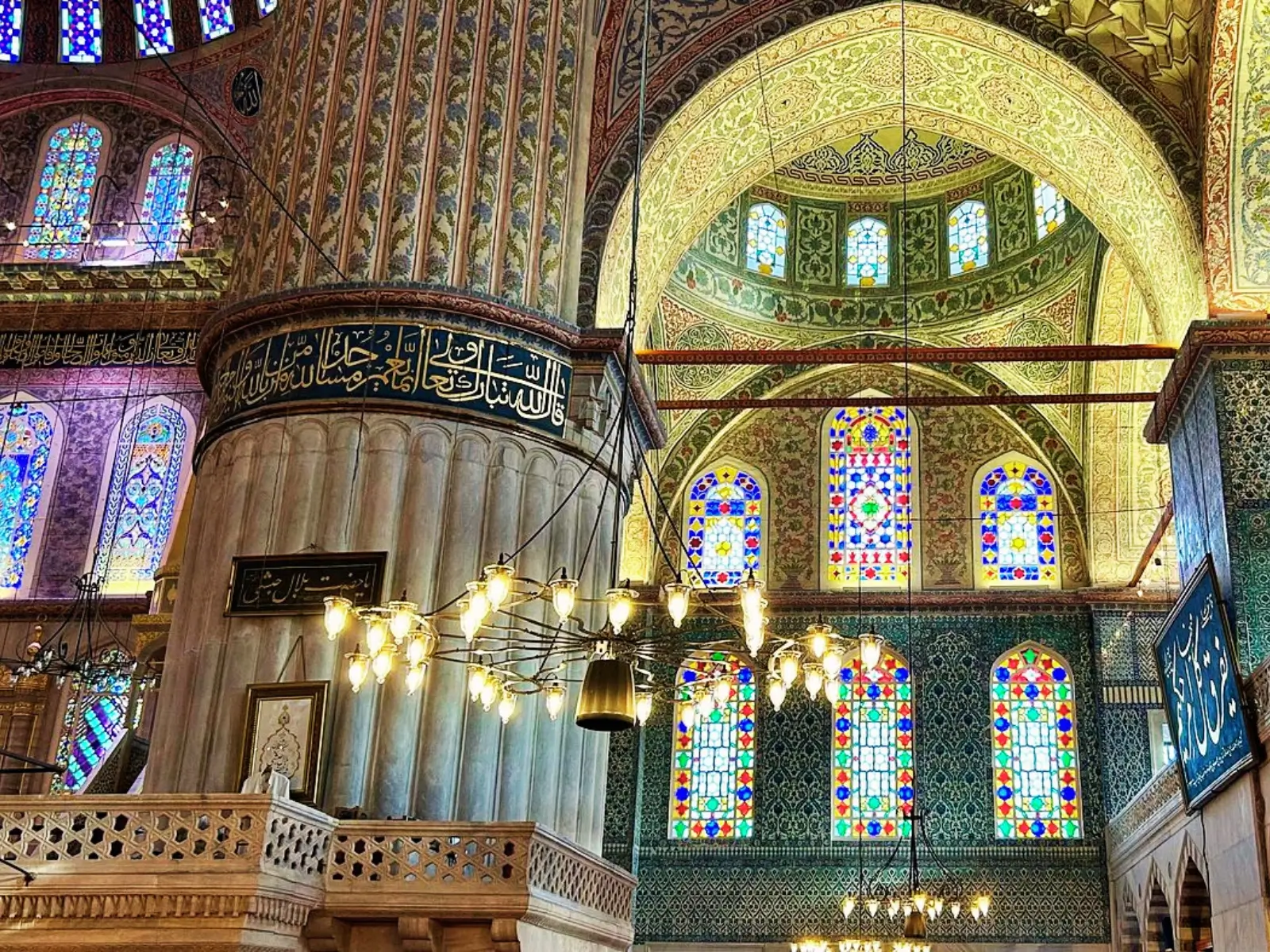
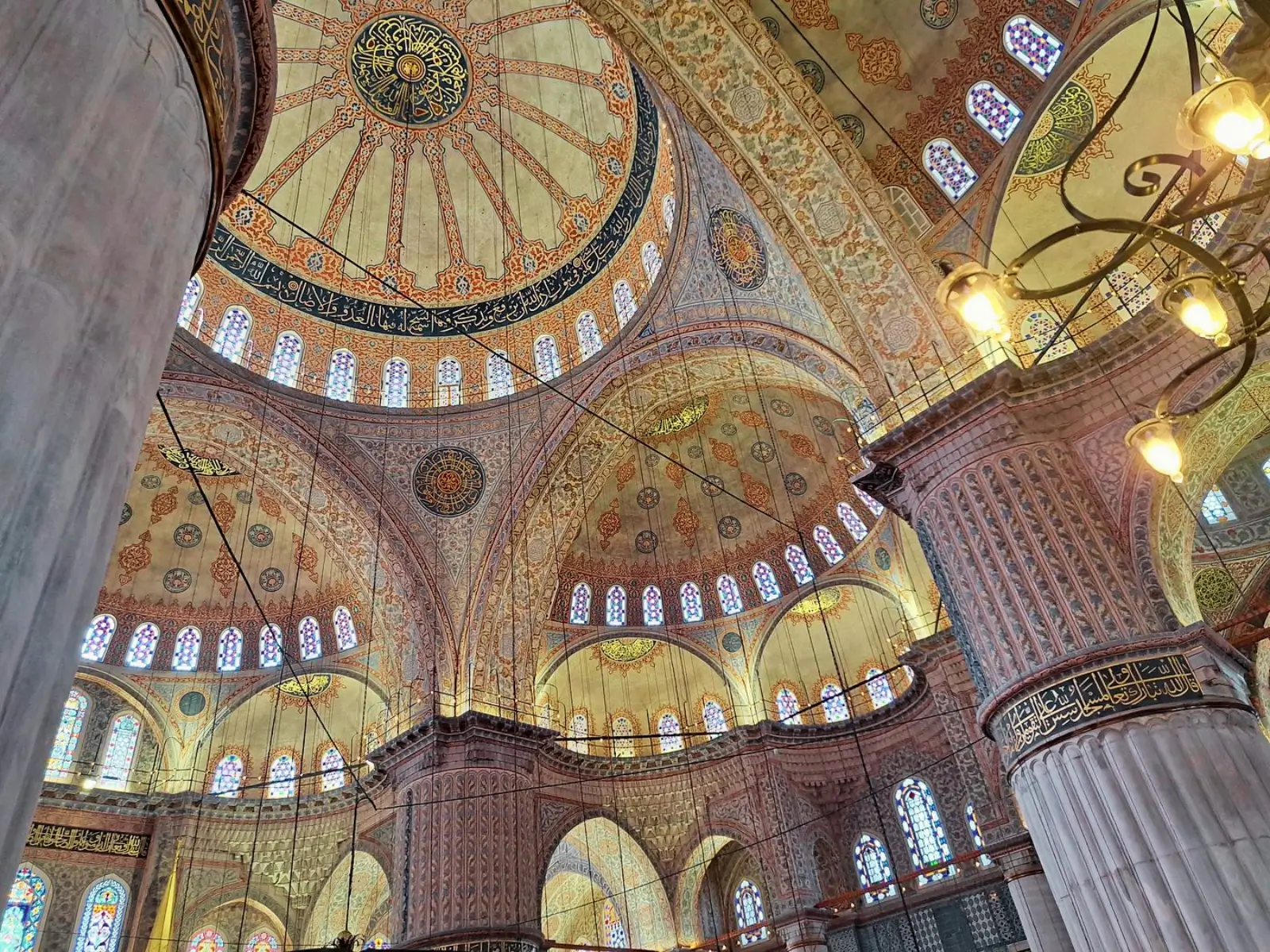
Inside the Blue Mosque, the atmosphere feels softer and calmer than the monumental exterior suggests. Light filters through stained-glass windows onto carpets and detailed İznik tiles, while the immense prayer hall carries a quiet echo of footsteps, whispered conversations, and distant prayer recitations. Despite the large number of visitors passing through daily, the mosque often retains a reflective and almost weightless atmosphere once inside.
What makes the experience of the Blue Mosque distinctive is the way spirituality and tourism coexist naturally. Worshippers continue arriving for prayer while travelers move slowly through the architectural space, creating an environment that still functions as a living religious site rather than only a preserved monument.
The surrounding courtyards also shape much of the experience. Open spaces between the Blue Mosque, Hagia Sophia, and Sultanahmet Square create shifting perspectives of domes, fountains, trees, and historic stone architecture that change dramatically depending on weather and time of day.
Early mornings tend to feel calmer and more atmospheric, while sunset hours bring warmer light across the mosque’s exterior and a stronger sense of Istanbul’s historic skyline unfolding around the area.
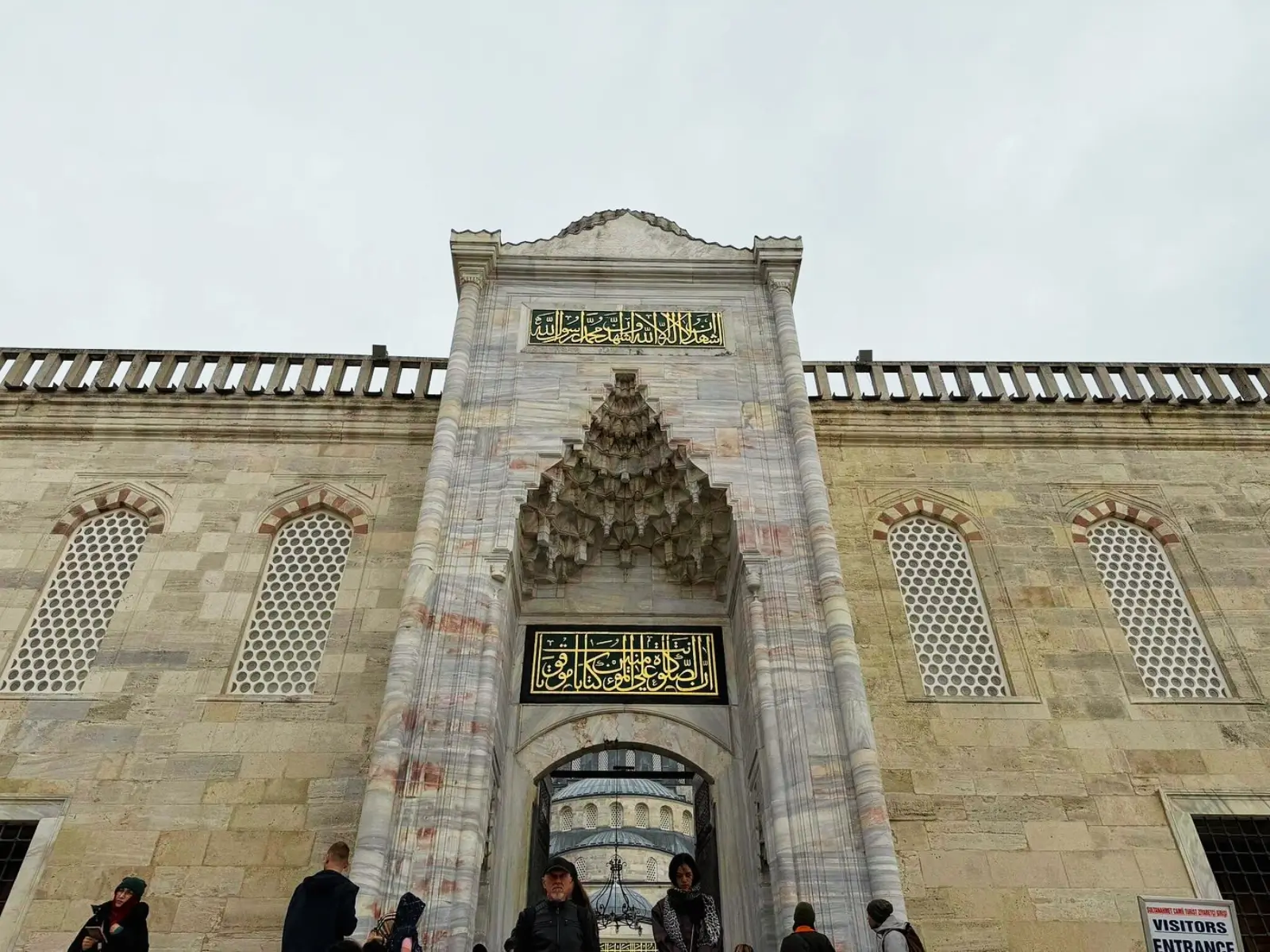
Located in Fatih within the Sultanahmet area, the Blue Mosque sits inside the historical core of the city, surrounded by landmarks such as Hagia Sophia, the Basilica Cistern, and Topkapı Palace.
The district itself carries a very particular atmosphere. Tram sounds move through the square, street vendors sell roasted chestnuts and simit nearby, and visitors from around the world fill the open spaces between centuries-old monuments. At the same time, quieter side streets around Sultanahmet still reveal small tea houses, traditional hotels, local restaurants, and residential corners that preserve traces of older Istanbul rhythms.
The mosque changes character noticeably throughout the day. Mornings often feel quieter and more architectural, while afternoons bring dense crowds moving through the historic center. Evenings create one of the city’s most atmospheric settings, when the illuminated domes and minarets begin glowing against the darkening skyline.
For many first-time visitors, the Blue Mosque becomes one of the defining visual memories of Istanbul — not only because of its architecture, but because of how naturally it blends spirituality, imperial history, and the living movement of the city around it.