
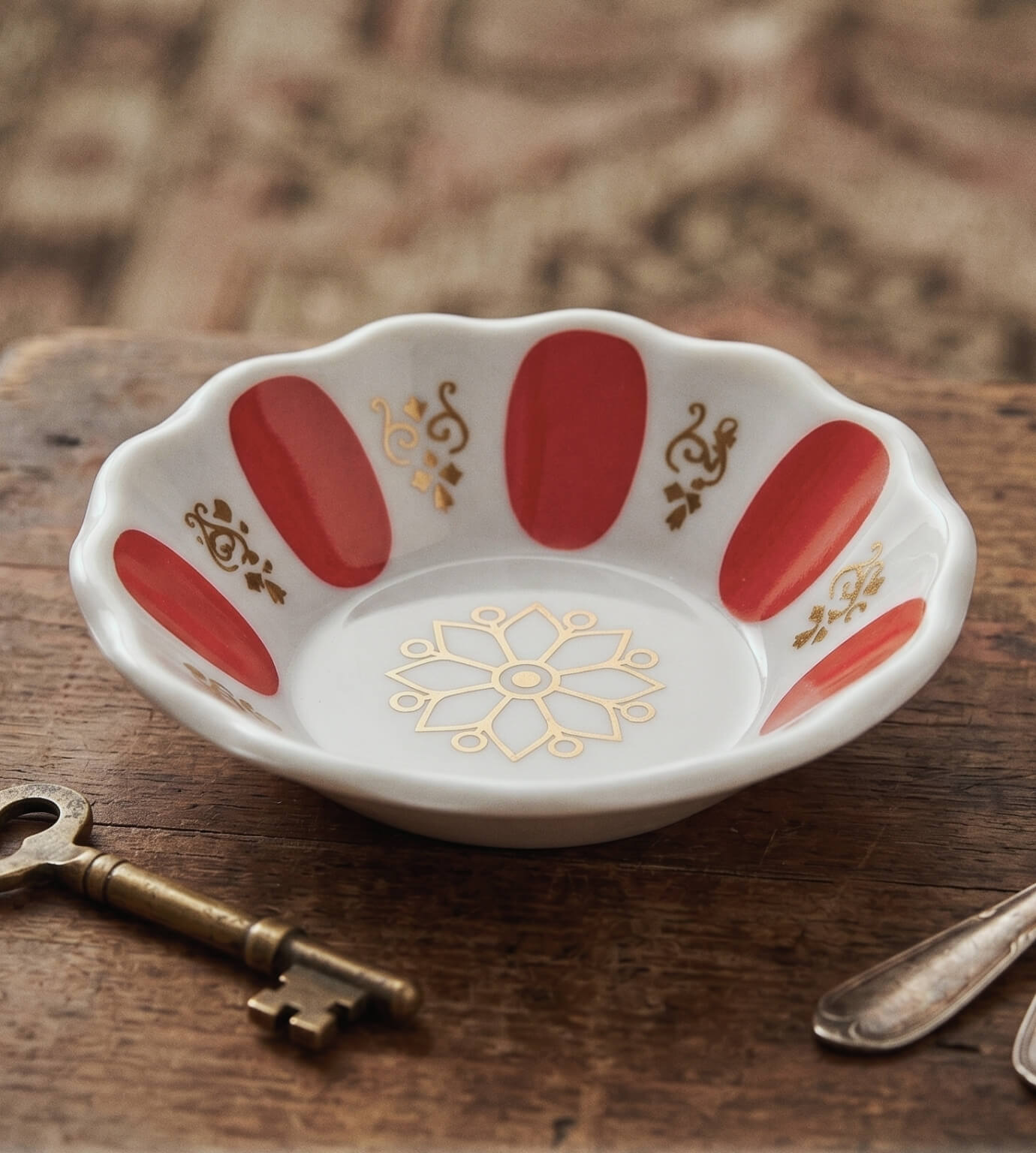
Not completely, of course. The classic red tea saucer can still be found in traditional tea houses, village homes, and the occasional kitchen that never felt the need to follow every new trend. But compared to a few decades ago, it has largely disappeared from everyday life.
And we think it deserves a comeback.
For generations, these saucers were part of Turkish life. White plastic with the unmistakable red pattern around the edge, they sat underneath tea glasses during family breakfasts, neighbourly visits, and long summer evenings on the balcony. Nobody bought them because they were fashionable. They were simply what tea was served on.
Today, many of those saucers have been replaced by increasingly decorative tea sets covered in gold details, elaborate patterns, and delicate finishes. They look impressive in store windows and social media photos, but often struggle to survive everyday use. The red tea saucer never had that problem. It wasn’t trying to be luxurious. It was practical, familiar, and somehow always exactly where it needed to be.
More importantly, it became attached to a certain atmosphere.
Looking at one today immediately brings back memories of tea trays carried through crowded living rooms, the sound of teaspoons hitting glass, sunflower seeds shared between friends, and conversations that stretched far longer than anyone expected. The saucer itself was never the center of attention, yet it quietly became part of countless moments that defined everyday life in Turkey.
That may be why it feels surprisingly relevant again. What was once ordinary now feels iconic. What once seemed outdated now feels retro. And what once existed in almost every household has become a small design object that represents a very specific version of Turkish culture.
Perhaps we are not really nostalgic for the saucer itself. Perhaps we are nostalgic for everything that came with it.
For balconies filled with conversation. For unannounced visitors. For second and third glasses of tea. For evenings spent talking rather than scrolling.
So yes, we believe the red tea saucer deserves a comeback. Not hidden away as a vintage collectible. Not displayed behind glass. Back on the table, exactly where it belongs.
And who knows? If the red tea saucer returns, perhaps some of those long Turkish balcony nights will return with it.